
Six roasts, one coffee: inside Javier's lab
Javier roasted the same batch of coffee six times. All six cups tasted different. Here's what changes when you move the roast.
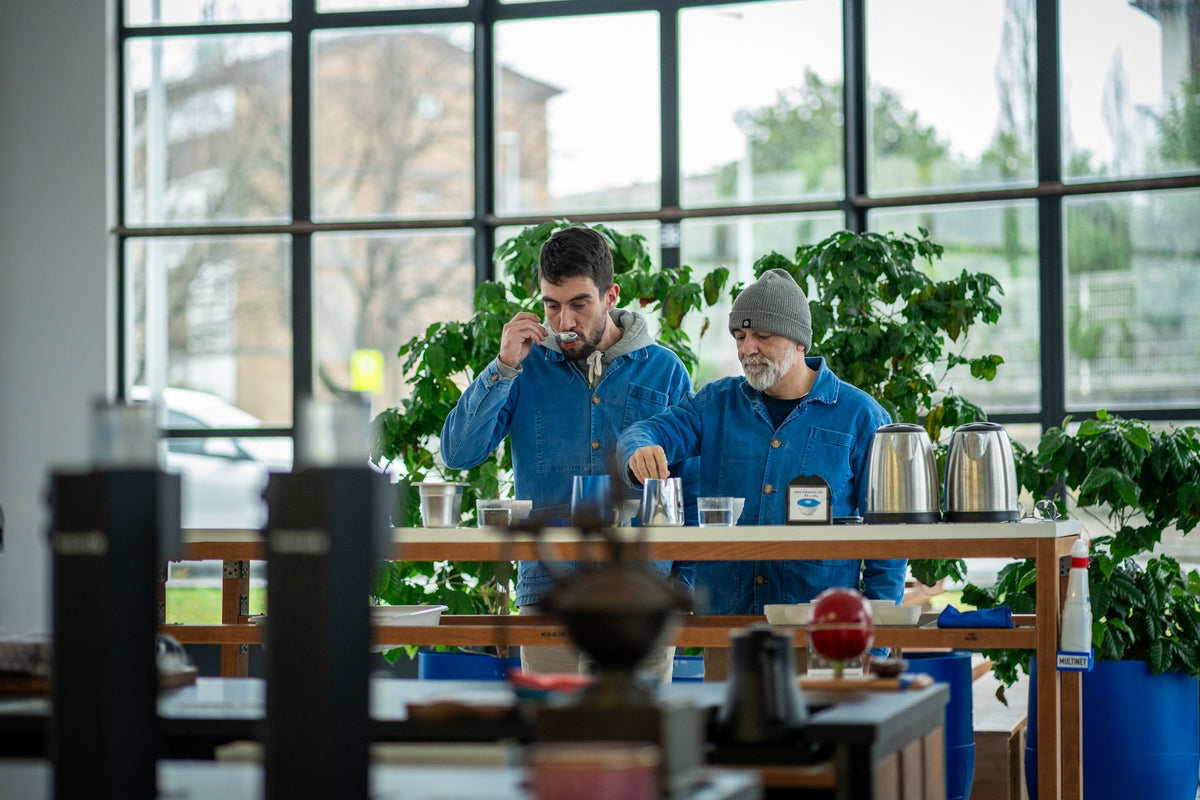
There's a question we get a lot at the bar: why can the same coffee taste so different depending on who roasts it? The short answer is that roasting isn't a chore, it's a decision about flavour. The long answer is the one we want to share today, because this month Javier spent several weeks repeating the same experiment over and over: taking a single batch of green coffee and roasting it in six different ways.
What really changes when you roast?
When we talk about a "roast profile" we mean a handful of very specific decisions: the temperature at which the coffee goes into the drum, how long it takes to reach first crack (that small snap that marks a turning point), how long development lasts after that crack, and the temperature at which the coffee is finally dropped so it can begin to cool. Moving any of these variables, even slightly, changes the result in the cup: more or less sweetness, more or less acidity, more or less body.
The experiment
Javier took a single batch, a coffee he'd been wanting to understand in depth, and roasted it six times, changing the development time and the drop temperature each time. The result was six cups of the same coffee that, tasted one after another, seemed almost like different coffees. Some profiles gave a very lively, almost citric acidity, but fell short on body. Others gained sweetness and roundness, but lost some of the clarity that made that coffee special at origin. One, roasted more slowly and with a slightly longer development than usual, achieved what Javier was after: keeping the vibrancy of the origin without sacrificing balance in the mouth.
Why we're telling you this
We could have stayed with the first profile that worked reasonably well. But at Sakona we see roasting as a craft of precision, not approximation, and that means giving each coffee the time it needs until we find the version that represents it best. This is the profile we are already using with this batch, and you can get it both as beans for home and on our filter menu at the café in Madrid (calle Embajadores, 166).
This article opens a series we'll be publishing throughout the year: a diary of the roasting work at Sakona, with its successes, its doubts and, from time to time, an experiment that doesn't turn out as we expected. If you like this kind of content, stay around, because there's more.


